
Country
Bulgaria tax guide Sourced summary, not advice.
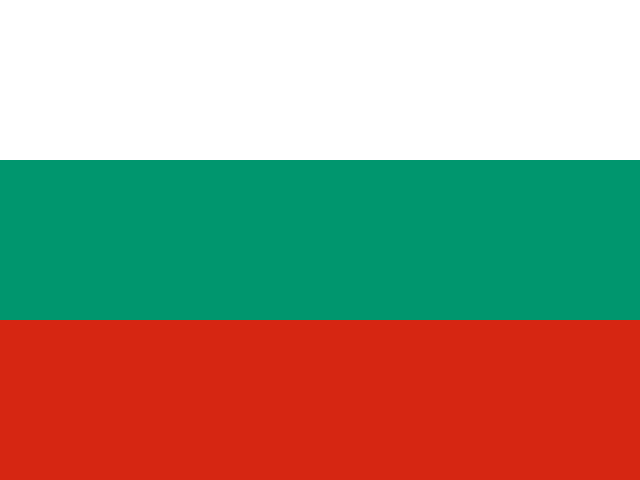 Bulgaria tax guide Sourced summary, not advice.
This page holds the Bulgaria sections that do not fit on the Bulgaria overview: What is the currency framework?. It is general information, not tax, legal, or financial advice.
What is the currency framework?
Bulgaria adopted the euro on 1 January 2026, becoming the 21st member of the euro area. The lev converted at the fixed EUR 1 = BGN 1.95583 rate that had applied under the Currency Board arrangement since 1997; cash circulated in both currencies during January 2026, and the euro has been the sole legal tender since 1 February 2026.
EUR 1 = BGN 1.95583 — fixed rate
The Until the 2026 changeover, the Currency Board meant Bulgaria could not independently devalue or revalue the lev. The National Bank of Bulgaria (BNB) holds full euro-equivalent reserves. For tax purposes amounts are denominated in euro from 1 January 2026; historic BGN filings convert at the fixed rate.95583 rate. Transfer-pricing benchmarks, Pillar Two GloBE thresholds (EUR 750M), and treaty reduced-rate claims all use this conversion. No currency risk applies to BGN/EUR positions.
What is the Pillar Two position?
Bulgaria transposed EU Directive 2022/2523 (GloBE rules) via successive amendments to the ZKPO.
In-scope MNE groups with annual global revenue above EUR 750M face a domestic top-up tax (QDMTT) to bring effective tax rates to 15%. The 10% headline CIT benefit does not apply at face value for these groups.
Smaller companies below the EUR 750M threshold are unaffected. The 10% headline rate remains fully available for domestic companies and smaller international groups.
How are cryptoassets taxed?
Bulgaria taxes individual cryptoasset disposal gains as "other income" under the ZDDFL at the standard 10% flat PIT rate. Acquisition cost is deductible, with FIFO cost-basis assumed under NAP Letter No. 24-34-50 (issued 2014, still the governing guidance).
Sponsored. We may earn a commission if you sign up through these links, at no cost to you. How we earn

Crypto-asset service providers now regulated under MiCA
The Financial Supervision Commission (FSC) supervises crypto-asset service providers. The Bulgarian National Bank (BNB) supervises stablecoin issuers. Mining and staking income is treated as business income: 15% for sole proprietors or standard corporate rates.
NFTs follow the same framework as fungible cryptoassets under current NAP guidance. DAC8 reporting (EU crypto data exchange) will add cross-border transparency from 2026 onward. NAP enforcement of crypto declarations has been active since 2018.
What is the treaty network?
Bulgaria has approximately 70 active bilateral double tax treaties — a substantial continental network. Bulgaria ratified the OECD MLI on 16 September 2022, with modifications entering force from 1 January 2023 onward depending on the counterparty.
EU directives — Parent-Subsidiary, Interest-Royalties, and ATAD I/II — apply alongside bilateral treaties for EU/EEA counterparties. The MLI modifies applicable treaties from 1 January 2023 onward per counterparty ratification status.
Where does Bulgaria sit in the Eastern European cohort?
Bulgaria anchors the EU Eastern-flank flat-tax bloc alongside Romania, Hungary, Croatia, Slovakia, and Czechia. All six are EU members with single-digit or low CIT rates and relatively simple headline PIT structures.
Common pitfalls and misconceptions
Bulgaria's flat-rate headline draws attention, but several recurring traps catch foreign companies and individuals off-guard:
The 10% PIT is only part of the cost. Employee social-security and health contributions add ~13%. Employer contributions add ~18%. Total employment cost far exceeds the headline PIT rate.
Registering as a sole proprietor (ET) triggers the 15% PIT rate under Art. 48 ZDDFL — not the standard 10%. Incorporated companies pay 10% CIT instead.
For MNE groups above EUR 750M global revenue, the QDMTT tops up to 15% effective minimum. The Bulgarian 10% rate advantage disappears for in-scope groups.
Bulgaria adopted the euro on 1 January 2026 at the fixed EUR 1 = BGN 1.95583 rate. Legacy contracts and prices denominated in BGN convert at that rate, and the euro has been sole legal tender since 1 February 2026.
B2B services default to the customer's country of establishment under EU rules. Digital services to consumers use OSS. Getting this wrong generates double-taxation exposure or unexpected Bulgarian DDS obligations.
NAP has actively pursued undeclared cryptoasset gains since 2018. DAC8 (EU crypto data exchange) amplifies cross-border detection from 2026. FIFO cost-basis is assumed — keep full acquisition records.
Bulgaria joined Schengen for air and sea borders in 2024. Land borders remain outside Schengen pending full accession. Cross-border employment and residency documentation at land crossings still requires standard passport checks.
Standard statute of limitations is 5 years from the return filing year. Fraud or non-filing extends to 10 years. Retain all records for at least 6 years after the relevant tax year.
When should you talk to a Bulgarian tax pro?
Some situations in Bulgaria are handled well through the NAP portal. Euro changeover follow-through - legacy BGN contracts and pricing converted at the fixed rate.
This page is general information. It is not personal guidance for any specific situation. Tax rules change. Always check current figures on the NAP website or with a licensed Bulgarian practitioner before filing.
Bulgaria: deadline and tax authority
Tax authority: National Revenue Agency (Natsionalna Agentsiya za Prihodite — NAP).
Questions about tax in Bulgaria
Who is the Bulgarian tax authority?
The National Revenue Agency (NAP — Natsionalna Agentsiya za Prihodite) administers Bulgaria's tax system under the Ministry of Finance. NAP operates through Sofia headquarters, regional directorates, and a Large Taxpayers and Insurers Office. Filings go through the NAP electronic services portal at nra.bg. Customs is handled by a separate agency, Agentsiya Mitnitsi.
When is the Bulgarian annual return due?
Personal income tax returns (ZDDFL) are due 30 April of the following year via the NAP portal. Corporate ZKPO returns are due 30 June. Monthly VAT (DDS) returns are due by the 14th of the following month. Withholding tax returns are due monthly by the 15th. A separate annual financial statement is required under the Accountancy Act.
Who is a Bulgarian tax resident?
Tax residents either maintain a permanent address in Bulgaria, OR are physically present more than 183 days in any 12-month period, OR are posted abroad by a Bulgarian state entity, OR maintain their centre of vital interests in Bulgaria. Residents pay tax on worldwide income. Non-residents pay tax only on Bulgarian-source income at flat rates.
What are the Bulgarian personal income tax rates?
Bulgaria applies a flat 10% PIT on employment, rental, and most capital income since 2008. Sole proprietors pay 15% on business income under Art. 48 ZDDFL. Dividends from Bulgarian companies carry 5% withholding (final). Listed-share gains on EU/EEA regulated markets are exempt. Social-security and health contributions add approximately 13% on the employee side.
What is the Bulgarian corporate tax rate?
Corporate income tax (ZKPO) is a flat 10% on taxable profit — the EU's second-lowest CIT. Dividend withholding for non-residents is 5% (0% for EU/EEA under Parent-Subsidiary Directive). Interest and royalty WHT is 10% (0% EU/EEA under Interest-Royalties Directive). Pillar Two QDMTT and IIR apply from 31 December 2023; UTPR from 31 December 2024. Loss carry-forward is 5 years; no carry-back.
What is the Bulgarian VAT rate?
Standard DDS is 20% under the ZDDS. A reduced 9% rate applies to hotel accommodation, restaurant services, books, baby products, and bread. Exports are zero-rated. Registration is mandatory above BGN 100,000 annual taxable turnover. EU OSS/IOSS applies to digital and distance-sale supplies. Mandatory e-invoicing and SAF-T are being phased in.
Last updated · Changes to this page · Sources and method · Published by Aurum Transfers Limited