

Afghanistan
Afghanistan's Afghan Revenue Department (ARD) administered personal income tax at progressive rates up to 20% and Business Receipts Tax at 2-10%. Since August 2021 the tax system operates under the Islamic Emirate's interim administration with highly uncertain enforcement. The country has no VAT, a minimal treaty network, and significant international sanctions affecting financial flows.
Tax authority: Afghanistan Revenue Department (ARD)
Armenia
Armenia's State Revenue Committee (SRC) administers personal income tax at a flat 20% (since 2020), corporate income tax at 18%, and AAH (VAT) at 20%. Armenia is a member of the Eurasian Economic Union (EAEU) Customs Union and has signed approximately 50 double taxation agreements.
Tax authority: State Revenue Committee of Armenia (SRC)
Azerbaijan
Azerbaijan's State Tax Service (STS) under the Ministry of Economy administers personal income tax at progressive 14%/25% across two bands, corporate income tax at 20%, and EDV (VAT) at 18%. The Alat Free Economic Zone and Hi-Tech Park offer 0% CIT holidays for qualifying projects. Around 55 double tax treaties are in force. The Manat (AZN) is de-facto pegged to the US Dollar at approximately 1.70. Oil and gas operations follow a separate Production Sharing Agreement framework administered alongside SOCAR.
Tax authority: State Tax Service under the Ministry of Economy
Bahrain
Bahrain's National Bureau for Revenue (NBR) administers VAT at 10% and, from 1 January 2025, a 15% Domestic Minimum Top-up Tax (DMTT) for in-scope multinationals. There is no personal income tax. Standard corporate income tax is 0% for non-oil sectors; the petroleum sector pays a separate 46% specialized rate. Bahrain has approximately 46 active double tax treaties. The Bahraini Dinar is pegged to the US dollar at 0.376 BHD per USD.
Tax authority: National Bureau for Revenue (NBR)
Bangladesh
Bangladesh's National Board of Revenue (NBR) administers the tax system. The fiscal year runs 1 July – 30 June, making Bangladesh one of few countries without a calendar tax year. Personal income tax is progressive at 0–25% across six brackets, with a higher tax-free threshold for women and senior citizens. Corporate tax is 27.5% for non-listed companies, 22.5% for listed, and up to 45% for tobacco companies. VAT runs at 15% standard. Bangladesh has approximately 36 active double tax treaties. Crypto transactions remain prohibited under Bangladesh Bank circulars.
Tax authority: National Board of Revenue (NBR)
Bhutan
Bhutan's Department of Revenue and Customs (DRC) runs the tax system under the Ministry of Finance. Personal income tax uses five progressive brackets topping at 25%. Corporate income tax is 25% standard, with a separate hydropower framework. A new Goods and Services Tax (GST) at 7% began rolling out in 2026, replacing the older Sales Tax framework. Bhutan runs a non-calendar July 1 to June 30 fiscal year. The Ngultrum (BTN) is pegged 1:1 to the Indian Rupee (INR), and INR circulates as legal tender. The treaty network is very small — approximately five agreements — with no US-Bhutan DTA.
Tax authority: Department of Revenue and Customs (DRC)
British Indian Ocean Territory
British Indian Ocean Territory (BIOT) is a UK Overseas Territory in the Indian Ocean (Chagos Archipelago). There is no civilian population and no domestic tax framework. Approximately 3,000–4,000 UK and US military personnel rotate through Diego Garcia base. UK Armed Forces personnel are taxed under UK HMRC rules; US Armed Forces personnel under US IRS rules via Status of Forces Agreement. In October 2024 the UK signed a treaty transferring sovereignty of the Chagos Archipelago to Mauritius, while retaining Diego Garcia base under a 99-year lease. The transition is ongoing as of 2026.
Brunei
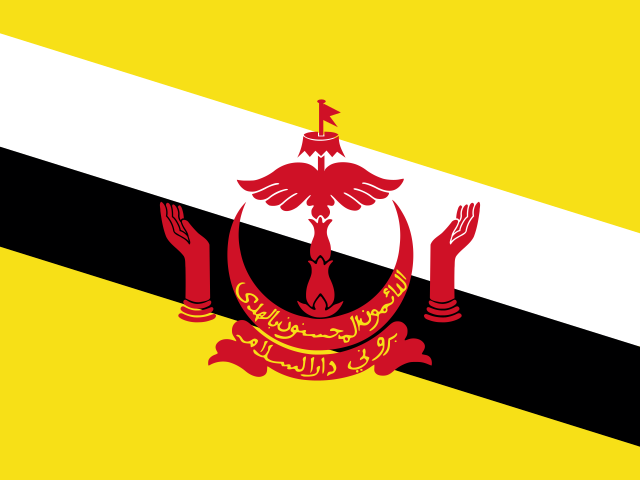
Brunei Darussalam has no personal income tax and no VAT or GST. The Inland Revenue Department (IRD) administers corporate tax at 18.5% standard (petroleum sector under a specialized ~55% production-share framework). The Brunei Dollar (BND) is pegged 1:1 with the Singapore Dollar under the 1967 Currency Interchangeability Agreement. Brunei has around 20 active double tax treaties but no US-Brunei DTA.
Tax authority: Revenue Division, Ministry of Finance
Cambodia
Cambodia's General Department of Taxation (GDT) runs a progressive Tax on Salary (TOS) at 0–20% across five monthly brackets, a 20% corporate Tax on Income (ToI), and 10% VAT. Distinctive features: a dual-currency economy where KHR and USD circulate side-by-side (80%+ of deposits in USD), the Bakong CBDC operational since 2020, Qualified Investment Project (QIP) tax holidays of 3–9 years via the CDC, and a compact ASEAN-aligned treaty network of ~12 bilateral agreements.
Tax authority: General Department of Taxation (GDT)
China
The State Taxation Administration (STA / 国家税务总局) administers Chinese tax under the State Council. Tax year is the calendar year; the annual IIT reconciliation (汇算清缴) window runs 1 March to 30 June. Residents are taxed on worldwide income at progressive 3–45% IIT across 7 brackets; corporate income tax is 25% standard with 15% for qualifying High-Tech Enterprises. VAT rates are 13/9/6/3%. China maintains 110+ bilateral tax treaties — one of the world's largest networks — and ratified the MLI in 2018. Mainland China is a separate tax jurisdiction from Hong Kong and Macau under 'One Country, Two Systems.' Cryptocurrency trading is banned; the e-CNY CBDC is the only state-sanctioned digital currency. Pillar Two Domestic Top-up Tax applies from 1 January 2024 for in-scope MNEs.
Tax authority: State Taxation Administration (STA / 国家税务总局)
Cyprus
Cyprus's Tax Department (Τμήμα Φορολογίας) administers personal income tax at progressive 0–35 percent across five bands, corporate income tax at 12.5 percent (one of EU's lowest, tied with Ireland), and VAT at 19 percent standard. Non-domiciled residents enjoy a 17-year exemption from Special Defence Contribution on foreign-source dividends, interest, and rents. EU member since 2004; Eurozone since 2008. Pillar Two QDMTT implemented 2024 per EU Directive 2022/2523.
Tax authority: Tax Department (Τμήμα Φορολογίας)
Georgia
Georgia's Revenue Service of Georgia (RS) administers tax under a calendar-year system. Personal income tax is a flat 20%. Corporate tax follows an Estonian-style distributed-profits-only model (20% on distributions, 0% on retained earnings) adopted in 2017 — the world's third jurisdiction after Estonia (2000) and Latvia (2018). VAT is 18%. Georgia has ~57 active DTAs and was granted EU candidate status in December 2023.
Tax authority: Revenue Service of Georgia
Hong Kong
The Inland Revenue Department administers Hong Kong tax. Tax year (Year of Assessment) runs 1 April – 31 March; the BIR60 individual return is filed within one month of issue, typically May–June. Hong Kong applies a territorial source-of-income basis — only Hong Kong-source income is taxed. Salaries Tax tops at 17 percent progressive or 15 percent standard rate. Profits Tax is 8.25/16.5 percent two-tiered.
Tax authority: Inland Revenue Department
Corporate: 16.5% (source, as of 2026-11-14) · Income tax: 17% (source, as of 2026-11-14)
India
The Income Tax Department administers Indian direct tax. Tax year (Previous Year) is 1 April – 31 March; the Assessment Year follows. Individual returns are due 31 July (no audit) or 31 October (audit). New-regime slabs run 0/5/10/15/20/25/30 percent. Corporate rate is 22 percent (with cess + surcharge) under Section 115BAA; GST runs 0/5/12/18/28 percent.
Tax authority: Income Tax Department
Corporate: 30% (source, as of 2026-11-14) · Income tax: 30% (source, as of 2026-11-14)
Indonesia
DJP (Direktorat Jenderal Pajak) administers Indonesian tax. Tax year is the calendar year; individual SPT Tahunan returns due 31 March. Residents taxed on worldwide income at progressive 5–35 percent. Corporate PPh Badan 22 percent standard (19 percent for qualifying listed companies). PPN VAT 11 percent standard; 12 percent on luxury goods from January 2025. Pillar Two global minimum tax applies from January 2025. Indonesia has approximately 70 active double tax treaties and is the largest economy in ASEAN.
Tax authority: Directorate General of Taxes (DJP / Direktorat Jenderal Pajak)
Corporate: 22% (source, as of 2026-11-14) · Income tax: 35% (source, as of 2026-11-14)
Iran
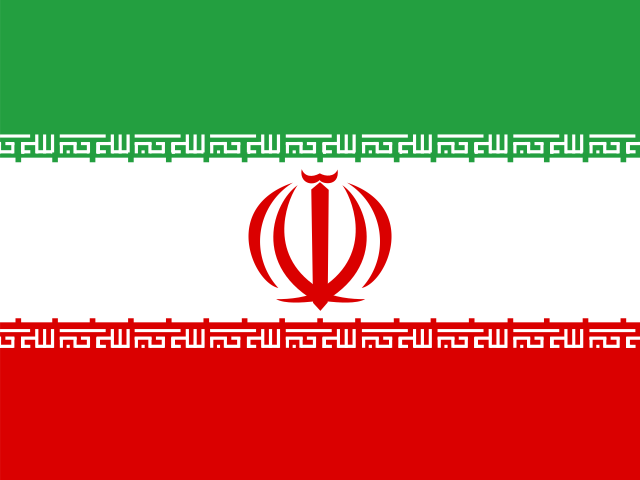
Iran's tax system is administered by INTA (Iranian National Tax Administration) under the Direct Taxes Act. Personal income tax uses progressive bands up to 35%. Corporate income tax is 25%. VAT is 9%. The Iranian fiscal year follows the Solar Hijri calendar, running roughly March 21 to March 20. Iran has approximately 50+ formal bilateral tax agreements but no treaty with the US or UK. Extensive OFAC, EU, and UN sanctions significantly constrain the practical reach of the treaty network for non-Iranian counterparties.
Tax authority: Iranian National Tax Administration (INTA / سازمان امور مالیاتی)
Iraq
Iraq's General Commission for Taxes (GCT) administers personal income tax at progressive 3/5/10/15 percent across four brackets, corporate income tax at 15 percent standard (35 percent for oil, gas, banks, and telecoms), and no general VAT — only a sales-tax framework. The Kurdistan Regional Government operates a separate parallel tax administration. Iraq is an OPEC founding member and Arab League member with approximately 14 active double tax treaties.
Tax authority: General Commission for Taxes (هيئة الضرائب العامة)
Israel
The Israel Tax Authority administers Israeli tax. Tax year is the calendar year; the personal annual return is due 30 April for individuals required to file. Residents are taxed on worldwide income at progressive rates 10–50 percent (top 50 percent including the surtax). Corporate rate is 23 percent. VAT rose to 18 percent on 1 January 2025.
Tax authority: Israel Tax Authority
Income tax: 47% (source, as of 2026-01-01)
Japan
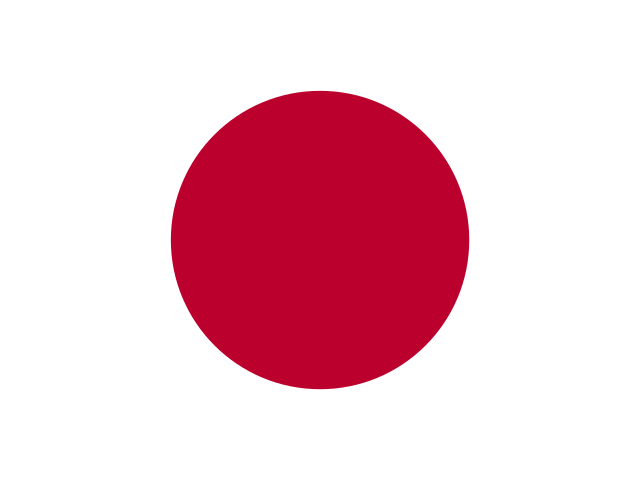
The National Tax Agency administers Japanese tax. Tax year is the calendar year for individuals; the Final Return is filed 16 February – 15 March. Three resident categories — permanent, non-permanent, non-resident — drive different tax bases. National rates run 5–45 percent plus 10 percent local Inhabitants Tax. Effective corporate load is roughly 30 percent.
Tax authority: National Tax Agency (NTA)
Corporate: 23.2% (source, as of 2026-04-01) · Income tax: 45% (source, as of 2026-04-01) · VAT / GST: 10% (source, as of 2026-04-01)
Jordan
Jordan's Income and Sales Tax Department (ISTD) administers a progressive six-bracket personal income tax (5%–30%) under Income Tax Law 38/2018, a multi-tier sectoral corporate tax (20%–35% base, plus 1% National Contribution), and a 16% General Sales Tax. The Jordanian Dinar (JOD) has been pegged to the US dollar at 0.708 since October 1995 — one of the longest-running pegs in MENA. Jordan has approximately 35 active bilateral double-tax agreements.
Tax authority: Income and Sales Tax Department (ISTD / دائرة ضريبة الدخل والمبيعات)
Kazakhstan
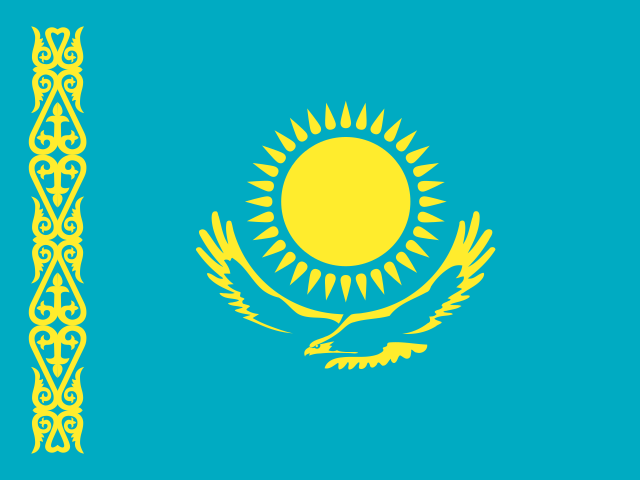
Kazakhstan's State Revenue Committee (KGD) administers a flat 10% personal income tax, 20% corporate income tax with SME reduced rates, and 12% VAT — one of the lowest in Eurasia. The Astana International Financial Centre (AIFC) operates as a separate English-common-law jurisdiction within Kazakhstan with zero CIT for qualifying entities through 2065. Kazakhstan has approximately 55 active DTAs including a 1993 US treaty, is an EAEU founding member, and is the world's largest uranium producer.
Tax authority: Committee of State Revenue of the Ministry of Finance
Kuwait
Kuwait's Department of Income Tax (DIT) runs the system. There is no personal income tax for any resident — citizen or expat. Corporate tax is 15% on foreign-owned companies only; Kuwaiti-owned companies pay 0% CIT but may owe Zakat-Tax (1%), NLST (1%), and KFAS (2.5%) totalling ~4.5% on listed-company profits. Kuwait has NOT implemented VAT despite the 2017 GCC Unified VAT Agreement — a distinctive abstention. Pillar Two DMTT effective 1 January 2025 (Decree-Law 157/2024). Kuwait has ~90 active bilateral DTAs and ratified the OECD MLI in 2018. The Kuwaiti Dinar (KWD) is the world's highest-valued currency unit at ~3.25 USD per KWD.
Tax authority: Ministry of Finance — Tax Department (وزارة المالية)
Kyrgyzstan
Kyrgyzstan's State Tax Service administers a flat 10% personal income tax — one of the lowest flat-rate PIT regimes globally — and a flat 10% corporate income tax. VAT is 12% standard. Kyrgyzstan is an EAEU (Eurasian Economic Union) member, holds ~30 active bilateral DTAs, and introduced a Virtual Assets law in 2022 covering crypto-exchange licensing and mining taxation.
Tax authority: State Tax Service of the Kyrgyz Republic (Государственная налоговая служба)
Laos
Laos's Tax Department (Ministry of Finance) administers progressive personal income tax of 0-25%, corporate income tax at a 20% standard rate with higher sector rates, and VAT at a 10% standard rate.
Tax authority: Tax Department, Ministry of Finance (ກົມສ່ວຍສາອາກອນ)
Lebanon
Lebanon's Ministry of Finance administers tax under a schedular personal income tax system (2–25% across income types), a 17% flat corporate income tax, and 11% VAT. The October 2019 financial collapse redefined every tax equation: the Lebanese pound (LBP) lost over 98% of its value, capital controls froze USD deposits, and the US dollar became the de facto transactional currency by 2024. Lebanon has roughly 33 active bilateral tax treaties. Lebanon's diaspora — estimated 8–14 million people globally — outnumbers the domestic population of approximately 5.5 million.
Tax authority: Ministry of Finance — Tax Directorate (وزارة المالية)
Macao
The Financial Services Bureau (DSF — Direcção dos Serviços de Finanças) administers Macao SAR tax. Macao uses a territorial system: only Macao-source income is taxable. Professional Tax (Salaries Tax) runs 7–12% on employment income above MOP 144,000 per year; many residents pay 0%. Complementary Tax (CIT) is 12% on profit above MOP 600,000 — among Asia's lowest. There is NO VAT in Macao. The Macao Pataca (MOP) is pegged to HKD at 1.03; HKD pegs to USD at 7.80 — creating a cascade double-peg unique in the world. Macao is the largest gaming market globally by Gross Gaming Revenue, with a 40% effective GGR tax on casino operators. The 1-Country-2-Systems Basic Law framework preserves separate Macao tax law from PRC mainland through 2049.
Tax authority: Financial Services Bureau (DSF / 財政局)
Malaysia
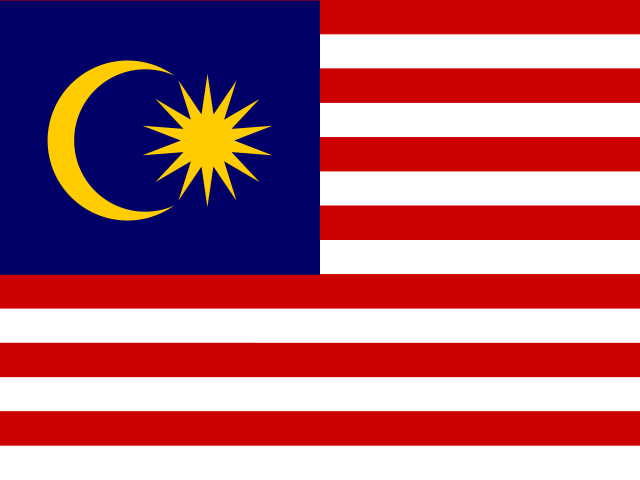
LHDN (Inland Revenue Board of Malaysia) administers Malaysian direct tax under the Income Tax Act 1967. The Year of Assessment is the calendar year; Form BE is due 30 April and Form B (business income) by 30 June. Malaysia operates a territorial-with-exemption basis — foreign-source income for individuals is exempt through 31 December 2026. Personal rates run 0–30 percent across ten brackets. Corporate tax is 24 percent standard, with SME graduated tiers of 15/17/24 percent. SST replaced GST in 2018; Service Tax rose from 6 to 8 percent on 1 March 2024. A new Capital Gains Tax on unlisted-share disposals took effect from YA 2024. Pillar Two GloBE applies from 1 January 2025 for large groups. Malaysia maintains roughly 80 comprehensive DTAs.
Tax authority: Inland Revenue Board (LHDN)
Corporate: 24% (source, as of 2026-11-14) · Income tax: 30% (source, as of 2026-11-14)
Maldives
Maldives Inland Revenue Authority (MIRA) administers the tax system. Personal income tax was introduced in April 2020 with progressive rates of 5.5%, 8%, 12%, and 15% above an annual MVR 720,000 allowance. Business Profit Tax is 15% (banks 25% surcharge). GST is 8% general rate and 16% for tourism services. The Maldives has roughly 3 active double tax treaties — among the thinnest networks in South Asia.
Tax authority: Maldives Inland Revenue Authority (MIRA)
Mongolia
Mongolia's General Department of Taxation administers a three-bracket personal income tax (10/15/20 percent post-2023 reform), a two-tier corporate income tax (10 percent up to MNT 6 billion, 25 percent above), and VAT at 10 percent. Mining dominates the economy — Oyu Tolgoi, Erdenet, and Tavan Tolgoi together account for roughly 25 percent of GDP. A Tax Stabilization Investment Agreement framework locks rates for large mining projects. Mongolia has approximately 30 active bilateral tax treaties, including a 2001 US convention — rare among smaller Asian states.
Tax authority: General Department of Taxation (Татварын Ерөнхий Газар)
Myanmar
Myanmar's Internal Revenue Department (IRD) administers personal income tax at progressive 0–25% across six brackets, corporate income tax at 22%, and Commercial Tax (CT, VAT-equivalent) at 5%. Post-February-2021 context: US OFAC, EU, UK, and Canadian sanctions on military-linked entities affect cross-border banking and remittances. Myanmar has approximately 9 active bilateral tax treaties. No US DTA. The Myanmar Kyat (MMK) operates under a managed exchange-rate with a significant post-2021 divergence between official and parallel rates.
Tax authority: Internal Revenue Department (IRD)
Nepal
Nepal's Inland Revenue Department (IRD) administers personal income tax across five progressive bands (1% to 36%) based on the Bikram Sambat fiscal year running 16 July to 15 July, corporate income tax at 25% standard (30% for banks), and VAT at 13%. The Nepalese Rupee is pegged to the Indian Rupee at 1 INR = 1.6 NPR.
Tax authority: Inland Revenue Department (IRD / आन्तरिक राजस्व विभाग)
North Korea
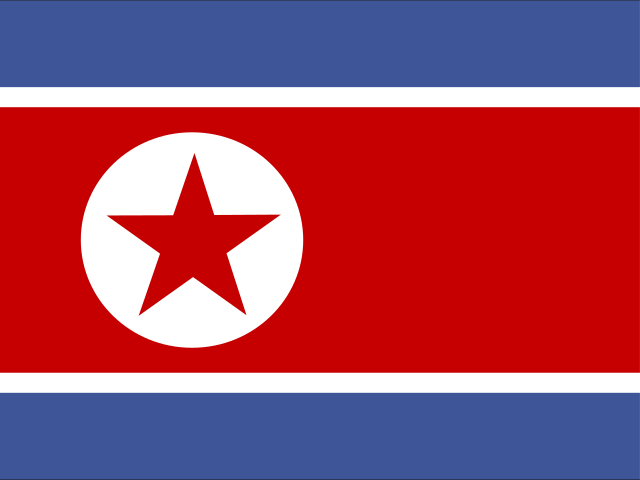
The Democratic People's Republic of Korea (DPRK) formally abolished personal income tax for citizens in 1974. A Foreign-Invested Enterprise Income Tax Law (FIEL) sets a 25% rate for foreign-invested entities. The Rason Special Economic Zone applies a 14% preferential corporate rate. Extensive UN, US, and EU sanctions prohibit virtually all financial engagement without specific licensing. No OECD-framework DTA network exists. For TaxProsRated readers, the relevant content is: sanctions-compliance screening, FIEL and Rason SEZ mechanics, and the tax obligations of DPRK-origin diaspora in their host countries (South Korea, Japan, United States, United Kingdom, China).
Oman
Oman's Tax Authority administers no general personal income tax, corporate income tax at 15 percent flat, and VAT at 5 percent (GCC-harmonised). The 2024 Personal Income Tax Law announcement (effective from 2028) targets individuals earning above OMR 30,000 annually at 5 percent — Oman would be the first GCC peer to implement individual PIT.
Tax authority: Tax Authority of Oman (هيئة الضرائب)
Pakistan
Pakistan's Federal Board of Revenue (FBR) administers personal income tax at progressive 0-35 percent across six brackets for salaried persons (with separate higher schedule for non-salaried), corporate income tax at 29 percent for most companies (super tax adding up to 10 percent for high-income years 2022-2024), and Sales Tax on goods at 18 percent (raised from 17 percent in Finance Act 2024). Provincial sales taxes on services apply separately at varying rates.
Tax authority: Federal Board of Revenue (FBR)
Palestine
Palestinian Authority's Ministry of Finance General Department of Income Tax administers personal income tax at progressive 5/10/15 percent across three bands and corporate income tax at 15 percent flat (20 percent for telecoms; 35 percent banking sector). VAT at 16 percent under VAT Law harmonised in part with Israeli framework under Paris Protocol 1994. Post-7-October-2023 conflict creates substantial economic and administrative disruption.
Tax authority: Palestinian Ministry of Finance — Income Tax & VAT Department
Philippines
The Bureau of Internal Revenue administers Philippine taxes alongside the Bureau of Customs. Personal income tax runs 0-35 percent under the post-TRAIN brackets after the 1 January 2023 second-stage rate cut, corporate tax sits at 25 percent (20 percent for small domestic corporations) after CREATE Act 2021, and VAT remains 12 percent. Crypto and digital-asset rules are still developed via BIR rulings rather than statute.
Tax authority: Bureau of Internal Revenue (BIR)
Corporate: 25% (source, as of 2020-07-01) · Income tax: 35% (source, as of 2023-01-01)
Qatar
Qatar's General Tax Authority (GTA) administers no general personal income tax, corporate income tax at 10 percent on foreign-owned entities and PE-attributable income (oil/gas at 35 percent), and no general VAT. Pillar Two QDMTT effective for fiscal years from 1 January 2025 under successive amendments.
Tax authority: General Tax Authority (هيئة الضرائب العامة)
Saudi Arabia
ZATCA (Zakat, Tax and Customs Authority) administers Saudi tax. There is no individual income tax. Saudi/GCC nationals pay Zakat at 2.5 percent of Zakat base; non-Saudi-nationals' business income subject to 20 percent corporate tax. VAT 15 percent (raised from 5 percent in July 2020). Pillar Two QDMTT effective 1 January 2026.
Tax authority: Zakat, Tax and Customs Authority (ZATCA / هيئة الزكاة والضريبة والجمارك)
Singapore
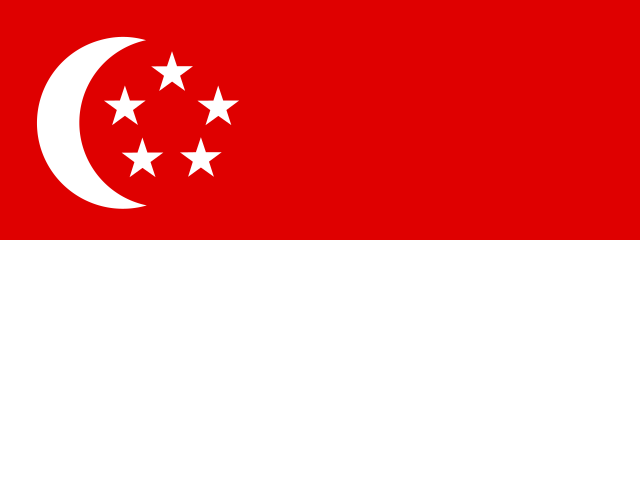
IRAS administers Singapore tax. Tax year is the calendar year; the Year of Assessment is the following year. Individual e-filing is due 18 April; corporate Form C-S/C is due 30 November. Residents are taxed on Singapore-source plus remitted foreign income. Resident rates 0–24 percent. Corporate rate 17 percent. GST is 9 percent.
Tax authority: Inland Revenue Authority of Singapore (IRAS)
Corporate: 17% (source, as of 2026-11-14) · Income tax: 24% (source, as of 2026-11-14) · VAT / GST: 9% (source, as of 2026-11-14)
South Korea
The National Tax Service administers Korean tax. Tax year is the calendar year; the personal Comprehensive Income Tax return is due 31 May following year-end. Residents are taxed on worldwide income at progressive rates 6–45 percent plus 10 percent local resident-tax surcharge. Corporate rates run 9/19/21/24 percent on a four-bracket scale. VAT is a flat 10 percent.
Tax authority: National Tax Service (NTS)
Sri Lanka
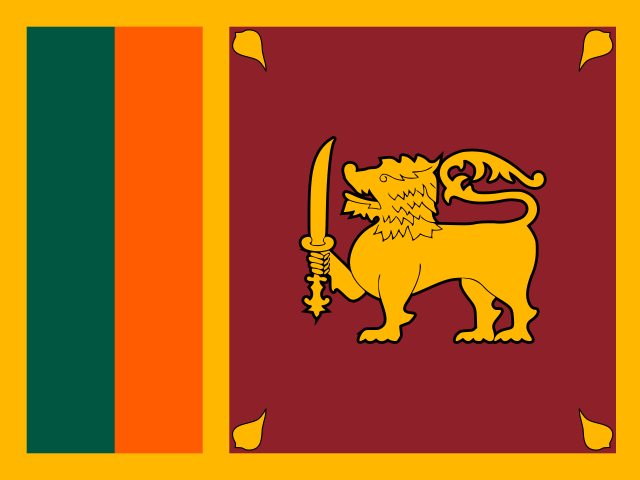
Sri Lanka's Inland Revenue Department (IRD) administers personal income tax at six progressive brackets from 6% to 36% (post-2023 IMF reform), corporate income tax at 30% standard (14% SMEs, 45% sin sectors), and VAT at 18% (raised from 15% in January 2024). The April 2022 sovereign default and IMF Extended Fund Facility programme have driven the most aggressive tax-rate increases in South Asia in two decades. Sri Lanka has approximately 45 active bilateral double-tax treaties.
Tax authority: Inland Revenue Department (IRD)
Syria
Syria's General Commission for Taxes and Fees administers personal income tax at progressive 5-22 percent across multiple bands and corporate income tax at 14/22/28 percent depending on entity type. Syria is subject to extensive EU/UK/US sanctions and post-2011 conflict context creates substantial financial-flow restrictions.
Tax authority: Ministry of Finance — General Directorate of Taxes (وزارة المالية)
Taiwan
Taiwan's National Taxation Bureau under the Ministry of Finance administers personal income tax (Individual Income Tax) at progressive 5-40 percent across five brackets, profit-seeking enterprise income tax (corporate) at 20 percent, and Value Added/Non-Value Added Business Tax at 5 percent (one of the lowest standard rates in Asia). Pillar Two QDMTT applies from fiscal years beginning on or after 1 January 2025.
Tax authority: Ministry of Finance — National Taxation Bureau (財政部)
Tajikistan
Tajikistan's Tax Committee under the Government administers personal income tax at progressive 8/13 percent across two bands, corporate income tax at 18 percent (15 percent for service sector), and VAT at 14 percent (reduced from 18 percent under successive amendments). Tajikistan is in the Eurasian Economic Union accession track but is not a current member.
Tax authority: Tax Committee under the Government of the Republic of Tajikistan
Thailand
Revenue Department of Thailand (กรมสรรพากร) administers Thai tax. Tax year is the calendar year; PND 90/91 individual returns due 31 March (e-Filing extension to early April). Residents are taxed on worldwide income with remittance basis for foreign-source income from Por 161/2566 effective Jan 2024 — at progressive 0-35 percent. Corporate income tax 20 percent standard; VAT 7 percent (legally 10 percent reduced by Royal Decree year-by-year since 1999).
Tax authority: The Revenue Department (กรมสรรพากร)
Corporate: 20% (source, as of 2026-11-14) · Income tax: 35% (source, as of 2026-11-14) · VAT / GST: 7% (source, as of 2026-11-14)
Timor-Leste
Timor-Leste's Tax Authority administers personal income tax at progressive 0/10 percent (top 10 percent above USD 6,000 monthly), corporate income tax at 10 percent, and Sales Tax at varying rates. Timor-Leste uses USD as its currency.
Tax authority: Autoridade Tributária de Timor-Leste (AT)
Turkey
Gelir İdaresi Başkanlığı (GİB) administers Turkish tax. Tax year is the calendar year; individual annual return is due 31 March of the following year. Residents are taxed on worldwide income at progressive 15-40 percent (post-2022 reform). Corporate income tax 25 percent from 2024 (raised from 20 percent); KDV (VAT) standard 20 percent (raised from 18 percent on 10 July 2023). Inflation-accounting reactivated 2023.
Tax authority: Revenue Administration (Gelir İdaresi Başkanlığı — GİB)
Turkmenistan
Turkmenistan's Ministry of Finance and Economy administers personal income tax at flat 10 percent on most categories, corporate income tax at 8/20 percent depending on entity type (Turkmen-domestic vs. foreign-participation), and VAT at 15 percent. Turkmenistan operates under closed economic policies with limited international transparency.
Tax authority: Ministry of Finance and Economy — Tax Service
United Arab Emirates
The Federal Tax Authority (FTA) administers UAE tax. There is no individual income tax. Corporate Tax applies at 0% on taxable income up to AED 375,000 and 9% above, from financial years starting 1 June 2023. VAT is 5% (since 1 January 2018). CT returns are due 9 months after period-end.
Tax authority: Federal Tax Authority (FTA)
Corporate: 9% (source, as of 2026-11-14) · VAT / GST: 5% (source, as of 2018-01-01)
Uzbekistan
Uzbekistan's State Tax Committee administers personal income tax at flat 12 percent (post-2019 Mirziyoyev-era reform from prior 22.5 percent), corporate income tax at 15 percent (raised from prior 12 percent for general categories under successive amendments), and QQS (VAT) at 12 percent (reduced from 15 percent on 1 January 2023).
Tax authority: State Tax Committee of Uzbekistan (Давлат солиқ қўмитаси)
Vietnam
Vietnam's General Department of Taxation under the Ministry of Finance administers personal income tax at 5-35 percent across seven brackets, corporate income tax at a flat 20 percent, and VAT at 8 percent for most goods and services through 31 December 2026 (the statutory 10 percent rate cut by 2 points, extended by Resolution 204/2025/QH15). Pillar Two QDMTT applies from 1 January 2024 to in-scope MNEs.
Tax authority: General Department of Taxation (Tổng cục Thuế)
Yemen
Yemen's Tax Authority administers personal income tax at progressive 10/15/20 percent across three bands and corporate income tax at 20 percent flat (35 percent for telecoms, 50 percent for petroleum sector). Post-2014 conflict context creates substantial financial-flow restrictions and parallel-administration complexity.
Tax authority: Tax Authority (مصلحة الضرائب)






 British Indian Ocean Territory




 Hong Kong



 Israel


















 Taiwan







What is the Afghanistan tax framework?
Personal progressive income tax up to 20% and Business Receipts Tax at 2-10% (historically). Corporate income was taxed at 20% flat for entities above the Fixed Tax threshold. Afghanistan has no VAT — the indirect tax system is receipts-based. Post-August 2021 the Afghan Revenue Department (ARD) operates under the Islamic Emirate administration with uncertain enforcement capacity.
Who is the Armenian tax authority?
Armenia's State Revenue Committee (SRC, Petakan Ekamutneri Komite) under the Government of Armenia is the tax and customs authority. Filings flow through the SRC e-Filing electronic services portal. The principal credentialed profession is the Patentavor Hashvapah (Authorized Accountant), regulated by the Chamber of Accountants and Auditors of Armenia (CAAA).
Who is the Azerbaijani tax authority?
Azerbaijan's State Tax Service (STS, Dovlet Vergi Xidmeti) under the Ministry of Economy is the tax authority, following a 2019 reorganization of the former Ministry of Taxes. Customs is administered by the State Customs Committee. Filings flow through the e-Tax portal at taxes.gov.az. CPA Azerbaijan, regulated by the Chamber of Auditors, is the principal credentialed profession.
Who is the Bahraini tax authority?
The National Bureau for Revenue (NBR), under the Ministry of Finance and National Economy. The NBR was established in 2017 to administer VAT and expanded in 2025 to manage the DMTT framework. Customs duties fall under a separate directorate.
Who is the Bangladeshi tax authority?
The National Board of Revenue (NBR), under the Internal Resources Division of the Ministry of Finance, administers Bangladesh's tax system through the Income Tax Wing, VAT Wing (Mushak), and Customs Wing. NBR operates 31 Tax Zones for direct-tax filings. Chartered Accountants regulated by ICAB and Income Tax Practitioners (ITP) registered under the Bangladesh Bar Council are the principal credentialed practitioners.
Who is Bhutan's tax authority?
The Department of Revenue and Customs (DRC), under the Ministry of Finance, administers all national taxes. The Income Tax Act 2001 (as amended) and the Sales Tax, Customs and Excise Act 2000 are the primary statutes. The Royal Audit Authority (RAA) independently audits public accounts and licenses audit practitioners.
Last updated · Changes to this page
TaxProsRated is a product line developed, operated and managed by Aurum Transfers Limited.